Small Kitchen Remodel Cost Per Sq Ft: A Full Breakdown
Get a clear breakdown of small kitchen remodel cost per sq ft, including budget ranges, key factors, and tips to help you plan your renovation with confidence.
|
May 5, 2026
In this article:
A "small kitchen remodel" can mean something different to everyone. For one person, it’s a weekend project involving paint and a new backsplash. For another, it’s a complete transformation with a new layout and professional-grade appliances. This is why a simple "small kitchen remodel cost per sq ft" estimate often falls short. To truly understand what your project will cost, you need to define your vision first. We’ll walk you through the three main tiers of a remodel, from budget-friendly updates to high-end splurges, helping you align your dream kitchen with a realistic budget that works for you.
Key Takeaways
- Look beyond the square foot price: Your total cost is really determined by the scope of your project, the quality of materials you choose, and local labor rates. The single best way to save money is to keep your kitchen's current layout, avoiding the high cost of moving plumbing and electrical lines.
- Allocate your budget for the biggest impact: Plan for cabinets to be your largest expense (around 30-40% of the total), followed by countertops and appliances. This knowledge helps you decide where to splurge for a high-end look and where you can choose more budget-friendly options without sacrificing style.
- Protect your project with a contingency fund: Treat a 10-20% contingency fund as a required part of your budget, not an optional extra. This buffer is your best defense against surprises like hidden structural issues or code-required upgrades, preventing them from derailing your renovation.
How Much Does a Small Kitchen Remodel Cost Per Square Foot?
Figuring out the cost of a small kitchen remodel can feel like trying to hit a moving target. While using a "per square foot" number is a common starting point, the final price depends heavily on your choices. A small kitchen, which is usually anything under 100 square feet, can have a huge price range. Are you just swapping out the faucet and painting the cabinets, or are you tearing everything out and starting from scratch with high-end appliances? The scope of your project is the single biggest factor that will determine where you land on the cost spectrum.
To give you a clearer picture, we can break down the costs into three general tiers: budget-friendly, mid-range, and high-end. Think of these as starting points to help you align your vision with your wallet. Each tier represents a different level of investment and a different scope of work, from simple cosmetic updates to a full structural overhaul. Understanding how Realm works can also help you see how a dedicated advisor can guide you through these financial decisions, ensuring you get the most value for every dollar spent. This approach helps you move from a vague estimate to a concrete plan that fits your home and your finances.
The Budget-Friendly Range
If you're looking for a significant refresh without a complete overhaul, you can make a big impact with a budget-friendly project. This tier typically runs from $10,000 to $15,000. For this price, you’re focusing on cosmetic updates. Think painting existing cabinets, installing a new backsplash, swapping out old light fixtures, and maybe upgrading your faucet and cabinet hardware. For a very small kitchen (under 70 square feet), this budget can give the space a whole new feel. It’s a fantastic option if you want to make your kitchen more enjoyable or are making surface-level improvements to prepare your home for sale.
The Mid-Range Sweet Spot
This is the most popular category for a reason. A mid-range remodel, which generally costs between $20,000 and $65,000, offers a true transformation that balances cost and quality. In this range, you can expect to pay about $150 to $250 per square foot. This budget allows for major upgrades like all-new semi-custom cabinets, a full suite of new appliances, and quality countertops like quartz or granite. Most homeowners in this tier keep the kitchen’s existing layout to avoid the extra cost of moving plumbing or electrical lines. It’s the perfect choice for getting a beautiful, highly functional new kitchen that will last for years.
The High-End Splurge
For a truly luxurious, custom kitchen, you’ll be looking at a high-end remodel. These projects start around $90,000 and can easily go beyond $150,000, especially in high-cost areas like the Bay Area or Los Angeles. A high-end budget opens the door to a complete transformation with premium materials, fully custom cabinetry, and professional-grade appliances. This is where you can reconfigure the entire layout, move walls, and add features like a large island or a walk-in pantry. When you invest at this level, you’re not just updating a room; you’re creating a bespoke space tailored exactly to your needs, which is why homeowners choose Realm to manage such complex projects.
What Factors Drive Up Your Remodel Cost?
When you start budgeting for a kitchen remodel, it’s easy to get caught up in the cost per square foot. But that number is just a starting point. The final price tag on your project depends on a handful of key factors that can cause your costs to swing dramatically. Understanding these variables from the get-go will help you create a realistic budget and make informed decisions about where your money is best spent. From the layout of your space to the specific zip code you live in, here’s what really moves the needle on your remodel cost.
Kitchen Size and Layout
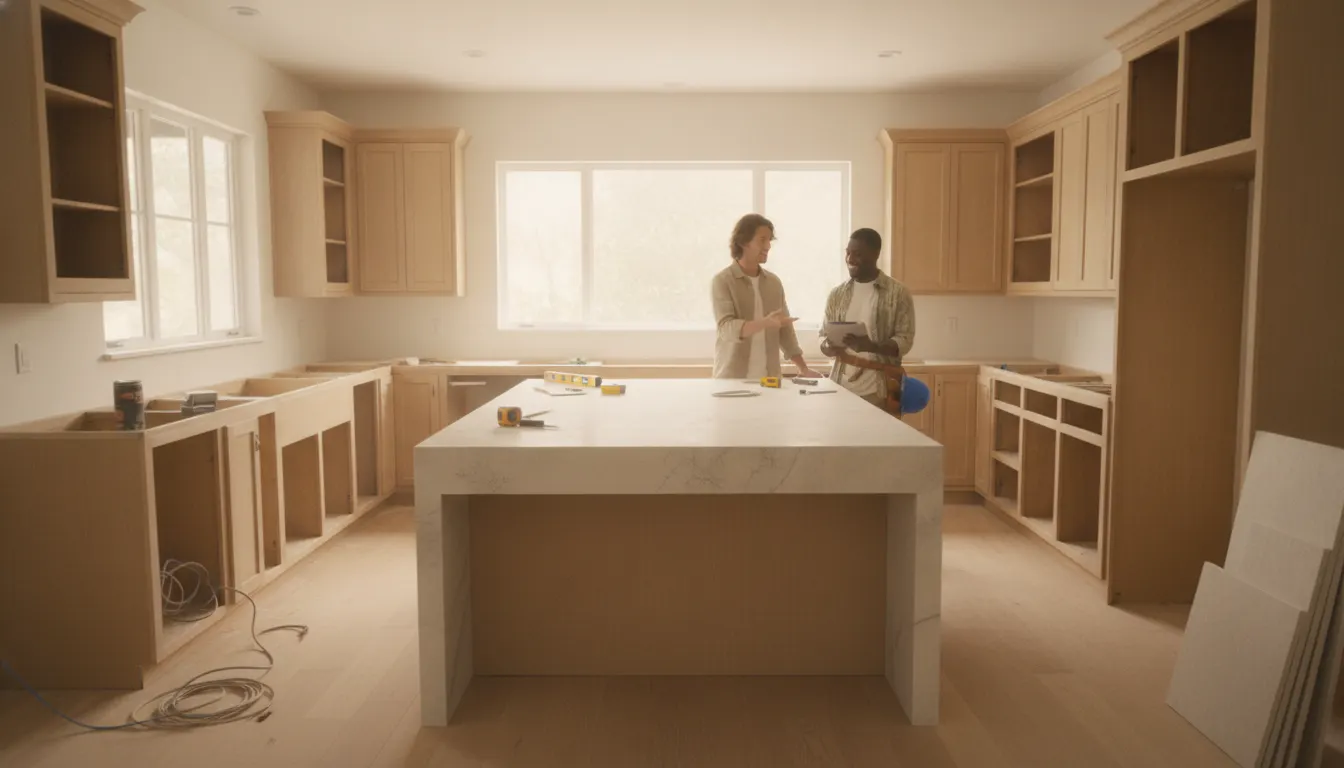
It might seem obvious, but it’s worth repeating: bigger kitchens need more materials and take longer to install, costing more. More square footage means more flooring, more paint, and more countertop and cabinet space to cover. But beyond sheer size, your kitchen’s layout is one of the most significant cost drivers. If you’re planning to reconfigure the space, be prepared for a budget increase. Moving plumbing, electrical, or gas lines is very expensive because it requires licensed plumbers and electricians to open up walls and floors. Keeping your kitchen’s existing footprint is one of the most effective ways to keep costs down, which is why having a solid project plan is so important.
Your Home's Location
Where you live has a major impact on your total remodel cost. Costs for labor and materials can be different depending on where you live, with major metropolitan areas typically being the most expensive. For homeowners in competitive real estate markets, this factor is especially important. For example, in the Bay Area, small condo kitchens can cost $40,000 to $60,000, especially if electrical upgrades are needed. This is because higher costs of living in cities like San Francisco, Los Angeles, and Seattle translate directly into higher rates for skilled labor. Realm specializes in these areas, connecting homeowners with local, vetted contractors who offer fair pricing for the region.
Quality of Materials and Finishes
Your personal taste is a huge factor in your budget. The materials and finishes you choose can account for a massive portion of your total spending. For instance, choosing natural stone or porcelain instead of laminate can add thousands of dollars to your countertop budget alone. The most expensive parts of a new kitchen are usually the cabinets and their installation. After that, worktops and appliances are the next biggest costs. Opting for custom cabinetry, high-end appliances, and designer fixtures will place your project at the top of the budget range, while choosing stock cabinets and mid-range appliances can save you a considerable amount.
Labor and Contractor Rates
Labor is a significant expense in any remodel, and it’s a cost you shouldn’t cut corners on. Labor costs for kitchen remodels have gone up recently, and rates for skilled tradespeople like electricians and plumbers are much higher in metro areas. The type of professional you hire also affects the price. A full-service design-build firm will have a higher price tag than a general contractor you manage yourself. This is where having a trusted partner can make a difference. Realm helps you find vetted professionals and get transparent quotes, so you know you’re paying a fair price for quality work without the stress of managing it all on your own.
How Do Key Elements Impact Your Budget?
When you start planning your kitchen remodel, it helps to know where your money is likely to go. A few key items will take up the majority of your budget, and understanding these costs ahead of time can help you make smarter decisions. By breaking down the expenses for cabinets, countertops, appliances, and more, you can create a realistic budget that aligns with your vision. This knowledge allows you to decide where to splurge for high-impact results and where you might be able to save. Let's look at how the main components of your kitchen will influence your overall spending.
Cabinets: Your Biggest Expense
Get ready, because cabinets are almost always the biggest line item in a kitchen remodel budget, typically accounting for 30% to 40% of your total cost. The price varies widely depending on the type you choose. Stock cabinets are the most budget-friendly option, running from $100 to $300 per linear foot. The most popular choice, semi-custom cabinets, gives you more flexibility with design and falls in the $200 to $650 per linear foot range. If you’re looking for a truly unique design, custom cabinets offer endless possibilities but come at a premium, costing anywhere from $500 to $1,500 or more per linear foot.
Countertops and Backsplash
Your countertops and backsplash are where style really comes to life, and they generally make up about 10% to 15% of your budget. Laminate is a great wallet-friendly choice, costing between $20 and $50 per square foot. The fan-favorite, quartz, is loved for its durability and beauty, with prices ranging from $75 to $150 per square foot. For a touch of luxury, materials like marble can create a stunning focal point, but you can expect to pay $100 to $250 or more per square foot. These surfaces have a huge impact on your kitchen's final look, so it's a great area to invest in if it fits your budget.
Appliances
Appliances are another significant expense, usually taking up 10% to 20% of your remodel budget. The cost here can swing dramatically based on the brands and features you select. A basic appliance package (think refrigerator, range, dishwasher, and microwave) can cost between $2,000 and $4,000. If you opt for mid-range brands with more advanced features, that number can climb to between $5,000 and $10,000. For those who dream of a chef's kitchen with professional-grade appliances, costs can easily reach $20,000 to $50,000 or more. Finding the right vetted professionals can help ensure your new appliances are installed correctly.
Flooring and Lighting
Don't overlook flooring and lighting, as these elements complete your kitchen's transformation. Flooring typically accounts for 5% to 10% of your budget, with total costs often landing between $1,500 and $5,000. The material you choose, from vinyl to hardwood or tile, will be the biggest factor. Lighting is just as important for setting the mood and ensuring your kitchen is functional, making up about 3% to 5% of the budget. Expenses for lighting can range from $1,000 to $5,000, depending on whether you need new wiring, recessed lights, pendants, or under-cabinet fixtures.
Which Materials Make the Biggest Difference in Cost?
When you’re planning your kitchen remodel, your material choices are where you have the most control over the budget. The finishes you select for your cabinets, countertops, and floors can swing your total cost by tens of thousands of dollars. Understanding the price differences between these options is the key to designing a kitchen you love that also respects your wallet. Let’s break down the major players and what you can expect them to cost.
Cabinet Material Options
Cabinets are often the biggest single expense in a kitchen remodel, typically making up 30% to 40% of your total budget. Your choice here sets the tone for the entire space. Stock cabinets are the most budget-friendly, running from $100 to $300 per linear foot. They come in standard sizes right off the shelf. For more flexibility, semi-custom cabinets are a popular middle ground, costing between $200 and $650 per foot and offering a wider range of styles and finishes. If you want a truly unique kitchen, custom cabinets are built to your exact specifications, but they come with a premium price tag of $500 to over $1,500 per foot.
Countertop Choices: From Laminate to Stone
Your countertops are another major design and budget decision, accounting for about 10% to 15% of the project cost. Laminate is the most affordable option at $20 to $50 per square foot and comes in a surprising variety of styles. However, the most popular choice for homeowners today is quartz, which offers incredible durability and a high-end look for $75 to $150 per square foot. If you’re aiming for a touch of luxury, natural stones like marble are beautiful but can be more delicate. You can expect to pay between $100 and $250 or more per square foot for a marble countertop.
Flooring That Fits Your Budget
Flooring typically makes up 5% to 10% of your kitchen budget, with the total cost often landing between $1,500 and $5,000. The material you choose has a big impact on this number. Vinyl and laminate are excellent budget-friendly choices that are also durable and water-resistant, which is a must for a kitchen. If you prefer the look of tile or hardwood, your costs will be higher. When making your decision, think about how you use your kitchen. A floor that’s easy to clean and comfortable to stand on can make a huge difference in your daily life. You can explore a variety of kitchen flooring options to find the perfect fit for your style and needs.
Understanding Appliance Tiers
Appliances can take up anywhere from 10% to 20% of your budget, and the costs vary dramatically depending on the quality and features you choose. A basic appliance package with a standard refrigerator, range, and dishwasher might cost between $2,000 and $4,000. Mid-range brands, which offer more features and sleeker designs, typically run from $5,000 to $10,000 for a set. For those who are serious about cooking, professional-grade appliances can easily push the budget to $20,000 to $50,000 or more. Think honestly about your cooking habits to decide which appliance tier makes the most sense for you.
What Are the Hidden Costs of a Kitchen Remodel?
Even the most carefully planned budget can get derailed by unexpected expenses. When it comes to a kitchen remodel, what you can’t see behind the walls can often cost you the most. These "hidden" costs aren't about contractors trying to pull a fast one; they're simply the realities of renovating a complex space. From bringing your home up to current building codes to dealing with surprises uncovered during demolition, these costs can pop up and add stress if you aren't prepared.
The key to managing them is knowing what to look for ahead of time. By anticipating these potential expenses, you can build a more realistic budget and a solid contingency fund. This way, a surprise doesn't have to become a crisis. Having an experienced team on your side is also a huge advantage. A dedicated advisor can help you anticipate these issues based on your home's age and location, ensuring your project stays on track. At Realm, our customized plans are designed to account for these variables from the very beginning, giving you a clearer financial picture.
Permits and Inspections
One of the first hidden costs you might encounter is permitting. Depending on the scope of your project, you will likely need permits for any electrical, plumbing, or structural changes. This isn't just red tape; it's a process that ensures the work is done safely and up to code, protecting your family and your home's value. The cost for permits and the required inspections can range from a few hundred to several thousand dollars. It’s a non-negotiable expense, and failing to get the proper permits can lead to fines and major headaches when you eventually sell your home.
Plumbing and Electrical Upgrades
If your remodel plan involves moving your sink, dishwasher, or oven, you’ll need to budget for plumbing and electrical work. Relocating these lines requires licensed professionals and can be more complex than you think, especially in older homes. Sometimes, you won't know the full extent of the work until the walls are opened. You might discover outdated wiring or old pipes that need to be replaced to meet current safety standards. These essential upgrades protect your home from potential hazards like fires or leaks, but they can definitely impact your budget if you haven't planned for them.
Unexpected Structural Repairs
The biggest unknowns in any remodel are lurking behind the drywall. Once demolition begins, you might uncover issues you had no idea existed, like water damage, termite destruction, or foundational problems that need immediate attention. While it’s impossible to predict these things with 100% certainty, an experienced contractor can often spot potential red flags before the work begins. This is where having a contingency fund becomes so important. Setting aside 10-20% of your total budget for these kinds of surprises ensures you can handle them without derailing your entire project.
Delivery and Disposal Fees
Finally, don't forget about the logistics. Getting your beautiful new cabinets, appliances, and materials to your home costs money, and these delivery fees can add up. On the flip side, you also have to get rid of all the old stuff. Disposing of demolition debris, old appliances, and packaging materials requires renting a dumpster or paying for a hauling service. While these individual fees might seem small, they can collectively take a noticeable bite out of your budget. It's a smart move to ask your contractor if these costs are included in their estimate or if you need to budget for them separately.
How Can You Maximize Your Remodel Budget?
Getting the kitchen you want without overspending is all about smart planning and strategic choices. A beautiful, functional kitchen doesn't have to come with a shocking price tag. It’s about knowing where your money will make the most difference and where you can find clever savings. By focusing on a few key areas, you can stretch your dollars further and create a space you’ll love for years to come. Let’s walk through some of the most effective ways to get the most value out of your renovation budget.
Prioritize High-Impact Features
To get the most bang for your buck, focus your budget on the elements that deliver the biggest visual and functional punch. In most kitchens, this means cabinets, countertops, and lighting. Your cabinets occupy the most surface area, so updating them can completely change the look of the room. Countertops are another major focal point and a primary work surface, making them a worthy investment. Finally, good lighting is transformative; it can make a small kitchen feel larger and a beautiful design truly shine. Concentrating your spending on these key features ensures your money goes toward what you’ll see and use every single day.
Know Where to Splurge and Where to Save
A high-end look doesn't require high-end materials everywhere. The secret is to mix and match. Decide where you want to splurge and where you can save. For example, you could invest in a stunning quartz countertop for your kitchen island, which often serves as the centerpiece, while using a more affordable but still durable material for the perimeter counters. The same goes for your backsplash; you might choose a beautiful, handcrafted tile for the area behind your stove and a classic, less expensive subway tile for the rest of the kitchen. A dedicated advisor can help you make these trade-offs so your budget is allocated effectively.
Keep Your Existing Layout to Cut Costs
One of the most significant ways to save money on a kitchen remodel is to keep your existing layout. Moving plumbing, gas lines, or electrical wiring is a major expense that can quickly eat up a large portion of your budget. It involves not only the cost of hiring plumbers and electricians but also the subsequent demolition and repair of walls, floors, and ceilings. By working with your kitchen’s current footprint, you can focus your funds on cosmetic upgrades like new cabinets, countertops, and appliances that will still make the space feel brand new without the complexity and cost of a major reconfiguration.
Make Smart Material Choices
Your material selections have a massive impact on your final bill. Choosing laminate or an entry-level quartz for your countertops instead of a high-end natural stone can save you thousands. For flooring, options like luxury vinyl tile (LVT) or modern laminate offer the look of hardwood or stone at a fraction of the price, plus they are incredibly durable and easy to maintain. When it comes to cabinets, opting for stock or semi-custom options instead of fully custom ones can also lead to significant savings. Realm can help you find vetted professionals who can source a wide range of materials to fit your style and budget.
What Are Some Smart Budgeting Strategies?
A successful kitchen remodel isn't just about beautiful finishes; it's about smart financial planning from the start. Having a clear and realistic budget is your best tool for a smooth project. It helps you make confident decisions, avoid surprises, and end up with a kitchen you love without the financial stress. Think of your budget as the blueprint for your project’s success. It guides every choice, from the cabinets you select to the contractor you hire. Let's walk through some practical strategies to get your numbers in order.
Set a Realistic Budget
First things first, you need a realistic number to work with. A good rule of thumb is to plan on spending between 5% and 15% of your home’s total value on a kitchen remodel. This guideline helps ensure your investment is proportional to your property's value, which is important for resale. For example, if your home is worth $800,000, a reasonable budget would fall between $40,000 and $120,000. This range gives you a solid starting point, which you can then refine based on your specific goals and material choices. A dedicated advisor can help you analyze these costs and create a customized plan that fits your home perfectly.
Build a 10-20% Contingency Fund
If there’s one piece of advice I give every homeowner, it’s this: build a contingency fund. No matter how well you plan, remodels almost always come with surprises. You might open up a wall and find old plumbing that needs replacing or decide on a last-minute design change. Setting aside an extra 10% to 20% of your total budget for these unexpected costs is crucial. This isn't "extra" money; it's a planned part of your budget that acts as a safety net. Having this fund ready means an unforeseen issue becomes a manageable task instead of a budget-breaking crisis.
Get Quotes from Multiple Contractors
Don't just go with the first contractor you talk to. To make sure you’re getting a fair price and quality work, you should get detailed quotes from at least three different professionals. When you compare these estimates, look beyond the bottom-line number. Check what’s included in each quote, from labor and materials to permits and cleanup. This process helps you understand the market rate and find a contractor who aligns with your project's scope and budget. Realm simplifies this step by connecting you with a network of vetted local contractors, so you can compare quotes with confidence.
Plan for Potential Delays
Just as you budget for unexpected costs, you should also plan for potential delays. A project you hope will take six weeks could easily stretch to eight or ten due to supply chain issues, inspection schedules, or those little surprises we talked about. Building some flexibility into your timeline from the beginning will save you a lot of stress. If you’re planning to be without a kitchen for a month, mentally prepare for it to be a bit longer. A realistic timeline helps you manage expectations and coordinate other parts of your life around the renovation without feeling constantly behind schedule.
What Common Budgeting Mistakes Should You Avoid?
A successful remodel is as much about smart planning as it is about beautiful design. Even with a small kitchen, a few budgeting missteps can cause major headaches and derail your project. Knowing what to watch out for ahead of time is the best way to keep your renovation on track and your finances in check. Here are four of the most common mistakes homeowners make and how you can steer clear of them.
Underestimating the Total Cost
It’s incredibly common for homeowners to guess that their project will cost 20% to 40% less than it actually does. This isn't about wishful thinking; it's just easy to overlook the hundreds of small details that add up. From sales tax and delivery fees to the exact hardware you want, total costs can quickly creep beyond your initial estimate. The best way to prevent this is to work from detailed, customized plans that account for every line item. This gives you a much clearer picture of the true cost from the very beginning.
Moving Utilities Unnecessarily
One of the fastest ways to inflate your budget is to change your kitchen’s layout. Moving plumbing, gas lines, or major electrical wiring is a complex and expensive job. Relocating plumbing alone can cost anywhere from $3,000 to $8,000, adding a significant amount to your bottom line before you’ve even picked out a countertop. If you want to keep costs down, try to work with your kitchen’s existing footprint. A design professional can help you find creative ways to improve function and flow without the massive expense of moving utilities.
Skipping the Contingency Fund
If there’s one rule in renovating, it’s this: expect the unexpected. That’s what a contingency fund is for. This is money, typically 10% to 20% of your total budget, that you set aside specifically for surprises. And surprises happen, whether it’s discovering old, faulty wiring behind a wall or finding hidden water damage under the floor. Without this financial cushion, an unforeseen problem can force you to make compromises on your design or, worse, halt the project altogether. Think of it as project insurance you can’t afford to skip.
Choosing a Contractor Based on Price Alone
Getting several quotes from different contractors is a smart move, but choosing one based only on the lowest bid can be a costly mistake. An unusually low price can be a red flag for subpar work, cheaper materials, or an inexperienced team, which can lead to expensive fixes down the road. Your relationship with your contractor is key to a smooth project. You should choose someone based on their experience, communication style, and references. Working with a network of reliable contractors ensures you’re getting quality work from a trusted professional, giving you peace of mind that the job will be done right.
When Should You DIY vs. Hire a Pro?
Deciding which parts of your kitchen remodel to tackle yourself and which to leave to a professional is a huge part of managing your budget and timeline. While rolling up your sleeves can definitely save you money on labor, it’s important to be realistic about your skills, the tools you have, and how much time you can commit. Some jobs are perfect for a weekend warrior, but others carry risks that just aren't worth it. Knowing the difference is key to a successful remodel that you’ll love for years to come, without any costly or dangerous regrets.
The best approach is to create a clear plan from the start. Identify the tasks you feel confident handling and budget for professional help on everything else. This hybrid strategy allows you to put your personal touch on the project while ensuring the most critical elements are handled safely and correctly.
Projects That Require a Professional
When it comes to your home's core systems, this is not the time to learn as you go. You should always hire licensed professionals for any work involving electrical, plumbing, or gas lines. The same goes for any structural changes, like moving a wall or altering load-bearing supports. These jobs are complex and governed by strict building codes for a reason: your safety. A mistake here can lead to fires, floods, or even structural failure. Finding the right licensed professional ensures the work is done correctly, is fully insured, and will pass inspection, protecting your home's value and your family's well-being.
DIY Tasks That Can Save You Money
If you're eager to get your hands dirty, there are plenty of tasks that can save you a significant amount on labor costs. Cosmetic updates are a great place to start. Think about jobs like painting walls and ceilings, swapping out old cabinet hardware for new pulls and knobs, or even assembling flat-pack cabinets. Demolition can also be a satisfying DIY task, as long as you’ve confirmed there are no pipes or wires in the walls you’re tearing down. These jobs are generally low-risk and allow you to invest your budget into more impactful areas, like higher-quality countertops or appliances.
Staying Safe and Up to Code
Whether you're doing the work yourself or hiring it out, safety and code compliance are non-negotiable. If you live in an older home, it's a good idea to test for hazardous materials like asbestos or lead paint before you start any demolition. A professional can help you with this. It’s also smart to plan for the unexpected. Experts recommend adding a contingency fund of 15% to 20% to your total budget. This buffer covers unforeseen problems, like discovering old water damage behind a cabinet or needing to update wiring to meet current codes, ensuring your project stays on track without financial surprises.
Related Articles
- Small Kitchen Remodel Cost Per Sq. Ft. Explained
- How Much Does It Cost To Renovate Your Kitchen?
- Small Kitchen Remodel Cost Without Appliances: A Guide
- What's the Typical Cost to Remodel a Kitchen?
Frequently Asked Questions
Is a $15,000 kitchen remodel realistic, and what can I actually get for that price? Yes, a remodel in this price range is definitely possible, but it’s important to focus on high-impact cosmetic updates rather than a full gut renovation. For this budget, you can give your kitchen a major facelift by painting existing cabinets, installing a new backsplash, swapping out light fixtures, and upgrading hardware and your faucet. This approach is perfect for making a space feel fresh and new without the cost and complexity of changing the kitchen’s entire structure.
Why is keeping my kitchen's layout so important for my budget? Keeping your kitchen’s current layout is one of the most effective ways to control costs. The moment you decide to move a sink, dishwasher, or stove, you introduce significant expenses. Relocating plumbing, electrical, or gas lines requires hiring licensed professionals to open up walls and floors, which can add thousands of dollars to your project before you’ve even chosen your finishes. By working with the existing footprint, you can direct your budget toward the things you’ll see and touch every day, like beautiful countertops and new appliances.
What's the best way to start if I feel overwhelmed by all these costs and choices? Feeling overwhelmed is completely normal; a kitchen remodel has a lot of moving parts. The best first step is to define your goals and set a realistic budget, using the 5% to 15% of your home's value as a starting point. From there, creating a detailed plan is key. This is where having an expert on your side can make all the difference. A dedicated advisor can help you sort through your options, create a solid plan, and connect you with vetted local contractors to bring your vision to life without the guesswork.
How much should I really set aside for a contingency fund, and what is it for? You should always plan for a contingency fund of 10% to 20% of your total project cost. Think of this as a non-negotiable part of your budget, not just "extra" money. This fund is your safety net for the inevitable surprises that come with any renovation. It covers costs for issues you can't see until demolition begins, like discovering outdated wiring that needs to be brought up to code, finding hidden water damage, or dealing with unexpected structural repairs. Having this buffer prevents a small problem from turning into a major financial crisis.
Where should I spend my money to make the biggest impact without breaking the bank? To get the most value, focus your spending on the kitchen’s most visible and hardworking features: cabinets, countertops, and lighting. These elements set the tone for the entire room. You can create a high-end look by being strategic, for instance, by splurging on a beautiful quartz countertop for your island and choosing a more affordable option for the perimeter. Or, you could invest in semi-custom cabinets and save on flooring with a durable and stylish luxury vinyl tile. It’s all about making smart trade-offs.